
 By
By You can take the SAT as many times as you want! While there is technically no limit to the number of times you can take the SAT, most students choose to take the SAT two or three times before submitting college applications. On average, 63% of students see a score improvement when they retake the SAT at least once.
Your odds of a score improvement will certainly be even better if you spend some time studying in between test dates.
Important things to how about how many times you can take the SAT:
- You can take the SAT as many times as you want.
- SAT scores are valid forever, but College Board does recommend retesting if it has been more than 5 years.
- You choose if you want to send SAT scores to colleges or not. A college will only see scores that you choose to send.
Should I Retake the SAT?
While it might be tempting to take the SAT a bunch of times – hoping for a better score each time -that’s really not an effective way to get your best score. This SAT thing isn’t about luck (and that’s probably a good thing, right?). Your odds of getting your dream score don’t go up with more retests; they will go up with more intentional studying and preparation.

So, should you retake the SAT? And if so, how many times?
This is going to depend on your situation. Let’s think through a few things that might impact your decision to retake the SAT.
- How long has it been since you took the SAT? Ideally you should have at least 2 months to study in between test dates. Don’t try to retest right after you just took the SAT! Two months is a reasonable length of time to put together a study plan, connect with a tutor if you need it, and get sufficient studying and practicing in for every section of the test. Leave cramming before tests to your college classes – the SAT is not the time!
- Is cost a concern for you? National SAT test dates (the ones you take outside of your high school) will cost you $55 each. If you will have trouble making this payment, know that there is financial assistance available. Before registering for every single test date during your junior and senior years, consider that it likely will add up, and it probably (definitely) isn’t worth it.
- How much time do you have before college deadlines? Typical regular decision application deadlines will start in January of your senior year. Early decision deadlines begin around October or November. SAT scores take about 4 weeks to get to your college after test day. If you’re tight on time, consider the opportunity cost of spending time studying for the SAT vs preparing a stellar admissions essay.
- How much time are you willing to devote to studying? Are you slammed with 12 different extracurriculars, a part time job, and taking care of your little sister on the weekends? Or maybe you have soccer practice every single day or a particularly rough work load with AP classes? Be realistic about your class workload and everything else you have going on. If you aren’t going to be able to study in between test dates, there’s no sense in retesting.
- Have you considered the ACT? While most students do equally well on the SAT and ACT, there’s a small percentage of students who will have a meaningful score difference between the two tests. You can take our free 90 minute diagnostic to get an idea of where you fall. Before going all-in on one of the tests, make sure you’re taking the right one for you.
It can be tempting to register for another SAT test date through tear-stained eyes after you get your disappointing scores back, but RESIST! Take a few days to let things settle. When you’re ready to come back, consider your personal situation. Ask yourself the questions above and put together a plan that works for you.
If you still aren’t sure if you should retake the SAT, give us a call at 866-210-4335. We’re always happy to give you our recommendation!
How Many Times You Should Take the SAT
Generally, we recommend students take the SAT two or three times before submitting college applications. For most students, this means taking the SAT for the first time in the fall or early spring of their junior year and planning to retest in the spring or early summer of their junior year.
Or advice: Aim to have the score you want by the end of your junior year.
This will set you up to be able to meet even the earliest college admissions deadlines. It will also help you leave your summer and early fall free to work on other pieces of your applications like essays or interviews. Sounds thrilling, doesn’t it? Maybe not, but you’ll probably thank yourself later if you aren’t studying for the SAT in September of senior year when everyone else is planning for their last homecoming.
If you’re planning ahead, you might be wondering when you should take (or retake) the SAT. One of the biggest factors of exactly when and how many times you should take the SAT is when you take Algebra II.
Kickstart Your SAT Prep with Test Geek’s Free SAT Study Guide.
Scenario 1: You will (or have) completed Algebra II by the end of sophomore year.
Congrats! You’ll have completed all of the math needed for the SAT by the end of your sophomore year. If this is you, you should consider prepping during the summer after your sophomore year and taking your first SAT in August or September of your junior year.
A little head start never hurt anyone. This will leave the rest of your junior year for a retest or two if you need it.
Breathe a little easier knowing you’re actually ahead of the college application game. It’s the small victories, right?
Scenario 2: You won’t (or haven’t) completed Algebra II by the end of sophomore year.
If this is you, aim for a February or March test date during your junior year. By this point, you will have seen 80-90% of the math material on the SAT. A tutor or some self-study can help fill in the gaps. It’s actually better to go ahead and take the SAT during this time than wait until you’ve finished your Algebra II class.
Testing in February or March will leave time for a retest or two in May or June. This will ensure you have your final test scores before any application deadlines. If you do really want to delay until the end of junior year, you’ll want to make sure you’re dedicating significant prep time during the spring semester so you (hopefully) get your best score on your first go.
What to Do Before You Retest
If you’ve decided to retake the SAT, it’s time to put together a study plan. Maybe you did study the first time around or maybe you went into it blind. Either way, it’s time to reevaluate and start prepping for what will hopefully be the last time you ever take this test.
#1 Evaluate Your Score Report
Taking a thorough look at your SAT score report is an important first step when preparing for a retest. Unless you have literal years to prepare for your next test, you’re probably going to want to do some prioritizing to ensure you are studying the right question types and the right underlying content. Intentional focus on the lowest hanging fruit will help you see the most significant score improvement.
Sometimes a student will have a pretty good feel for the areas they need to focus on. Other times, a student may be totally clueless. There’s certainly some investigation you can do yourself, but if you’re unsure, you might want to consult an expert SAT tutor who can help you strategize.
Pull out your score report, and let’s walk through it together.
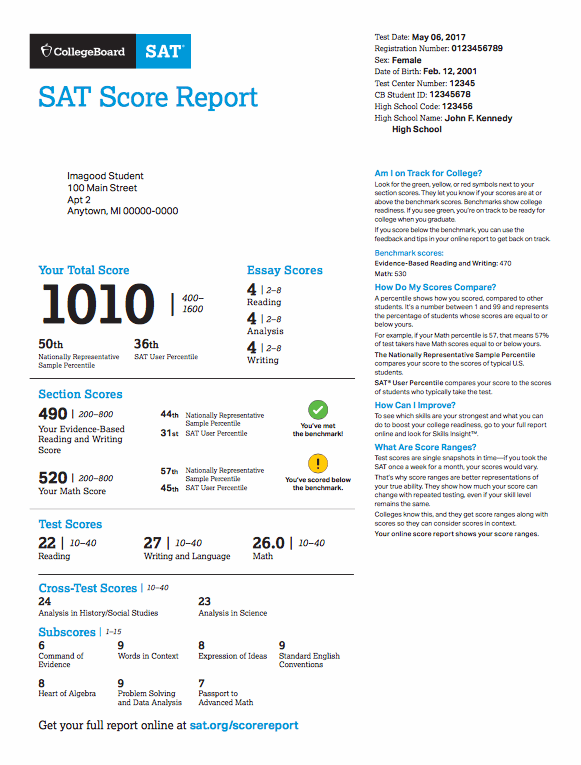
Questions to consider:
- What was your total score compared to the score you want?
- How do your section scores compare to each other? Are you significantly stronger on one vs the other?
- Recall that your Evidence Based Reading and Writing score consists of the Reading and Writing and Language sections. Take a look at how those scores compare.
- Does anything stand out among your subscores? This can really help point you towards the areas of the test you should focus on.
#2 Select the Right Test Date
Above in the “How Many Times Should You Take the SAT” we talked a bit about how to time the SAT. In general, you want to have 2 months or more in between test dates in order to adequately prepare.
Consider when your earliest college admissions deadline is. Back out at least one month to accommodate the time it takes colleges to receive test scores, then look at the available test dates.
It’s a balance.
You want to have enough study time, but you also don’t want to be cutting it too close to college deadlines. If you’re unsure, give us a call at 866-210-4335, and we can give you our recommendation.
#3 Study, Practice, Study – Repeat!
This is crucial. Before retaking the SAT, you need to study the underlying content as well as work through official practice test questions.
Hopefully after evaluating your score report you have a solid idea of what areas of the test you should be focusing on. When you’re ready, it’s time to get to work!
Looking to study on a budget? You can find some of our favorite free SAT study resources here.
Looking for some personalized help? Our SAT tutors are here to help build a study plan for you.
Looking for SAT practice tests? Learn how to make the best use of official practice tests here.
Final Thoughts – How Many Times Can You Take the SAT?
Short answer: there is no limit to the number of times you can take the SAT. The real question is how many times should you take the SAT? Or perhaps even, how many times do you want to take the SAT?
I don’t think anyone is out here taking the SAT for fun. It’s built for a purpose: to evaluate your college readiness and provide a meaningful data point for college admissions.
Stay focused on that purpose. Before retaking the SAT, consider some or all of the questions we evaluated in this article.
Happy studying!








Comments